On August 3, 2022, our cultivation operation faced one of the most difficult situations I’ve encountered in over a decade of cannabis cultivation.
Lightning strikes ignited multiple wildfires on the mountain where our cultivation site operated near Willow Creek, California.
Within hours, we were no longer managing a cannabis farm.
We were managing an emergency response operation.
The Fire Started Above Us
Our cultivation operation consisted of multiple terraced sections built into the mountainside.
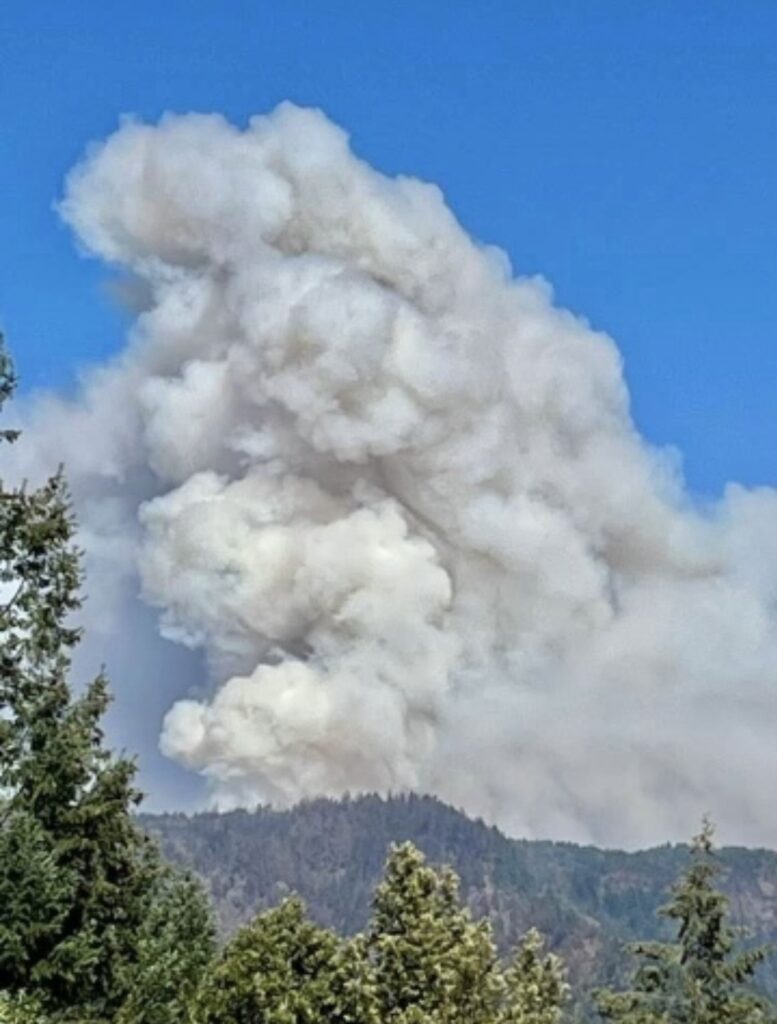
The fire began after lightning strikes ignited areas between what we referred to as the “Top Flat” and the “Middle Flat” of our cultivation site.
As smoke columns developed and fire activity increased, it became clear that portions of the operation were at immediate risk.
At that point, cultivation became secondary.
The priority became:
- employee safety,
- crop preservation,
- evacuation planning,
- and emergency logistics.
Preparation Made the Difference
One of the most important lessons I learned from this experience was that emergency planning starts long before the emergency.
Because our operations were located in remote mountain terrain, we had already developed extensive knowledge of:
- forestry roads,
- logging roads,
- secondary access routes,
- and emergency evacuation paths.
In remote cultivation environments, knowing how to reach your farm is only half the equation.
You also need to know how to leave it.
And sometimes, how to get back.
Agricultural Emergency Access Was Critical
One of the factors that ultimately allowed us to save much of the operation was a permit issued through our local agricultural department.
This permit allowed agricultural operators to access farms and ranches during wildfire emergencies, even when mandatory evacuation orders were in effect.
Without that documentation, we likely would not have been able to return to the property.
Because we had prepared in advance, we were able to coordinate an emergency response effort within hours.
Building the Response Team
Once we understood the severity of the situation, we assembled:
- multiple pickup trucks,
- several large rental trucks,
- harvesting crews,
- transportation crews,
- and emergency support personnel.
At that point, our objective was simple:
Save as much of the harvest as possible before the fire reached additional portions of the property.
California’s Emergency Cannabis Provisions
One of the realities many operators don’t realize is that California provides emergency regulatory flexibility during major wildfire events.
Under emergency circumstances, certain transportation and handling requirements can be temporarily modified to allow operators to protect agricultural products.
This flexibility allowed us to transport harvested cannabis to an alternate licensed facility where it could be properly dried and processed.
These provisions exist for exactly these types of emergencies.
Fighting Time
The response itself was unlike anything I had experienced before.
Teams equipped with:
- headlamps,
- fire extinguishers,
- chainsaws,
- and large cutting tools
worked through the night harvesting plants as quickly as possible.
We weren’t performing normal harvest procedures.
We were cutting entire plants and transporting whole stalks in order to move material away from active fire zones before smoke and flames destroyed it.
Smoke contamination alone can devastate cannabis crops.
Once flowering plants are exposed to significant smoke conditions, their market value can be severely impacted.
Every hour mattered.
The Physical Damage Was Severe
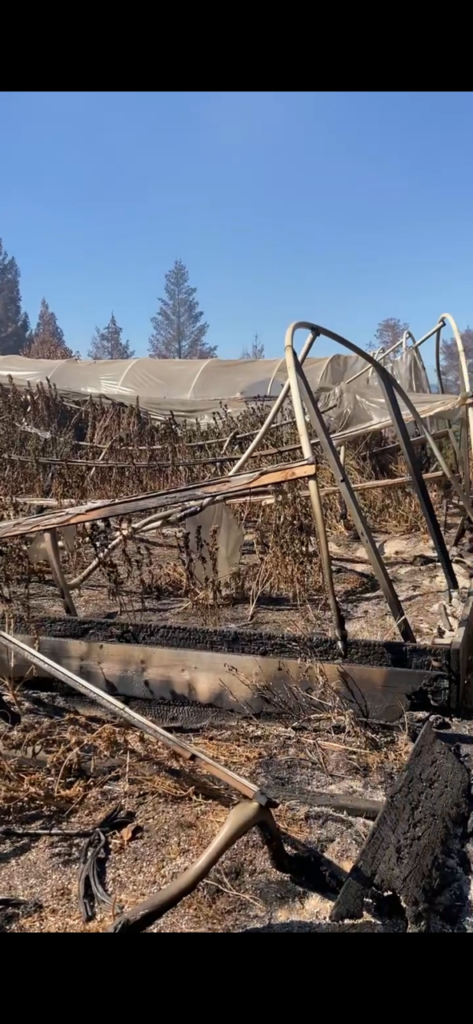
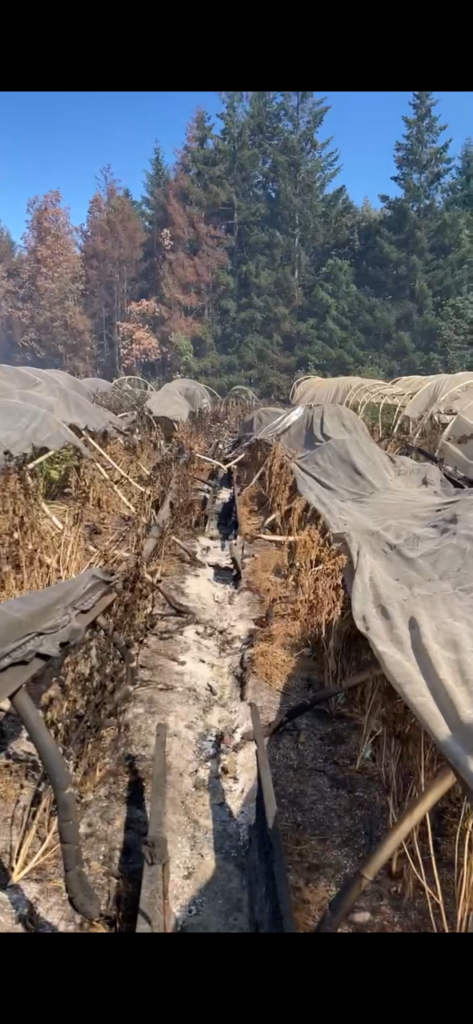
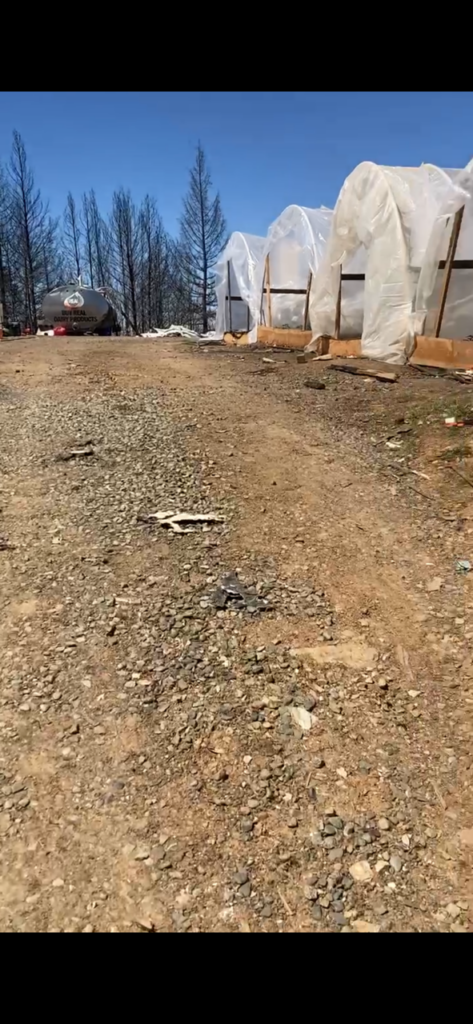
Despite our efforts, portions of the operation were ultimately lost.
The fire destroyed:
- cultivation infrastructure,
- wooden bed frames,
- irrigation components,
- hoop house systems,
- plastic coverings,
- and numerous other improvements.
Entire portions of the cultivation site were reduced to ash.
Recovery Took Another Year
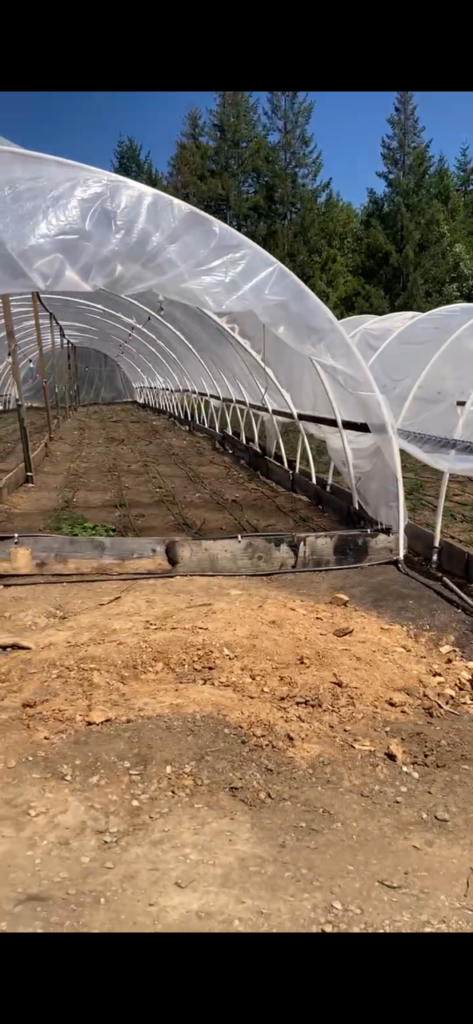
The following year, we returned to rebuild.
The recovery process required:
- clearing burned infrastructure,
- bulldozing damaged areas,
- rebuilding cultivation systems,
- replacing irrigation,
- and restoring operational capacity.
Without the emergency response efforts during the wildfire itself, rebuilding would have been significantly more difficult.
The Most Important Lesson
One of the biggest lessons I learned from this experience is that emergency preparedness is part of operating commercial agriculture.
In remote cultivation environments, operators should always have plans for:
- wildfire evacuation,
- alternate access routes,
- emergency transportation,
- crop protection,
- employee safety,
- and operational recovery.
Because emergencies don’t provide time to create plans.
They test the plans you already have.
Experience Matters During Emergencies
One of the realities of commercial cannabis cultivation is that eventually something will go wrong.
It may be:
- pests,
- weather,
- equipment failure,
- compliance issues,
- or natural disasters.
The operators who survive aren’t necessarily the ones who avoid every problem.
They’re the ones who remain calm, build systems, and adapt when everything goes wrong.
On August 3, 2022, we didn’t save everything.
But because of preparation, planning, and teamwork, we saved enough to rebuild.
And sometimes, that’s what success looks like.
James Cook
Cannabis Compliance, METRC & Operations Consulting